
Common Sense and Yoga: Is There A Link?

By Dr Chandra Nanthakumar
As known to all, the gross body in the human anatomy contains, amongst other components, the five sense organs (organs of perception) that is the eyes, nose, ears, skin and the tongue. While each of the sense organs exhibit a specific role in detecting stimuli from the surrounding and conveying signals to the brain for interpretation, the “common sense” is a far cry from that. To begin with, it is not a physical structure per se in the human body. Based on Oxford Learner’s dictionaries, “common sense” refers to one’s ability to think in a practical way and make sensible decisions. Past definitions have it as one’s innate capability to recognise and judge situations based on conventional dogmas and commonly shared experiences. As I see it, there appears to be an overlap in meaning between these two definitions. Nonetheless, Daitzman (2021) claims that common sense is no longer considered one’s innate ability but simply a true understanding of cause and effect. This definitely calls for some amount of reflection as this two-word term is used in everyday life by all and sundry.
As I kneel down, with Daitzman’s definition in mind, and sit comfortably on the mat to commence a yoga practice, the meaning begins to unravel at the intellect level. As a typical human being equipped with a mediocre level of intelligence, I can safely conclude that the definition sounds rational. As far as the practice of yoga is concerned, it definitely makes sense!
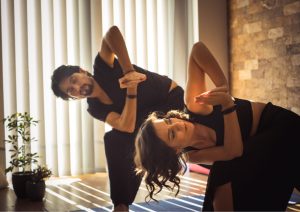
For those who are not so familiar with the practice of yoga and what it entails, this mind-body science involves several components such as mindfulness, pranayama (breathing techniques to expand life force), the journey in and out of asanas (physical postures), prathyahara (withdrawal of senses), dharana (concentration) and dhyana (contemplation).
For a regular mindful practitioner, the sequence will flow quite smoothly from one component to the other. Awareness is brought to different parts of the body not only at the gross but also at the subtle level. Using all the tools mentioned above, through constant practice, the practitioner gracefully drifts beyond the physical self and develops an awareness of the pranamaya kosha (i.e. the vital air sheath) and the manomaya kosha (i.e. the mental sheath) at the subtle body level. This happens because the practitioner has allowed it to effortlessly materialise at its own cause. There was no deliberate abuse of the body neither was there any rush into the practice. The practitioner pretty much used their common sense to weigh in on the pros of being steady and happy (sthiram and sukham) in the practice. Let me dive deeper for ease of understanding. For example, if the practitioner is unable to do 120 exhalations per minute in Kapalabhati pranayama (deep exhalations) due to a pre-existing health condition, the body will alert them to pause at a lower number. The fundamental rule in the practice of yoga is that the practice is pain-free and there should be no suffering. However, if the practitioner chooses to force the exhalations incessantly at the expense of the body’s incapability, the unpleasant effects of that violent action will surface and not augur well for them. Instead of feeling energised and joyful after the 120 exhalations per minute, they end up feeling restless, agitated and depleted of energy. Hence, the lack of common sense in the yogic practice can be detrimental to one’s health.
Similarly, a novice yoga practitioner needs to engage common sense at all times. They must have a sound understanding of what their body is capable of at the point of practice. They need to understand the consequence (i.e. effect) of forcing the body when doing a particular asana (i.e. cause). Most of the time, novice practitioners are enthusiastic about performing challenging asanas like the meditating crane pose (i.e. baka dhyanasana) or the double-handed cobra pose (i.e. dwihasta bujangasana). While enthusiasm is taken very positively in yogic science, some amount of common sense is needed to weigh in on the mechanics of getting into a pose. If each knee is not able to rest firmly on the upper arms respectively, the practitioner can always resort to a regressed version (i.e. attempting with one knee at a time or keeping both the feet grounded while having the knees firmly on the upper arms) of the pose at the initial stages. Secondly, the practitioner must understand that by merely knowing the mechanics, it may not necessarily get them into the full pose in the first few attempts. More often than not, consistent practice is needed depending on the state of the mind and body of the practitioner. Hence, it is evident that common sense and yoga go hand in hand.
However, when the desire of wanting to achieve the full pose is overwhelming despite possessing physical limitations, some practitioners end up hurting themselves. They may have forced the body relentlessly while adding excessive pressure to certain limbs (cause) and in that process brought upon injury to the self. Hence, it is important to understand the potential danger (i.e. the effect) of applying force when doing an asana (i.e. the cause). If one deeply comprehends the principle of cause and effect as set forth by Daitzman (2021), it is beyond doubt that they will exhibit some amount of common sense in the practice.
All in all, it is evident that a yoga practitioner has to exercise common sense in the practice of yoga in order to reap the benefits of the ancient-old science. Hence, is there a link between yoga and common sense? The answer is obvious, isn’t it?
References
Reid J. Daitzman (2021). Why “common Sense” is not so common. Personal Perspective: Common sense confuses reality with truth. Psychology today.