Dance Yoga: Beyond the Pose – Why Everyone is Talking About the “New Flow” in Yoga
By Priya · · 5 min read
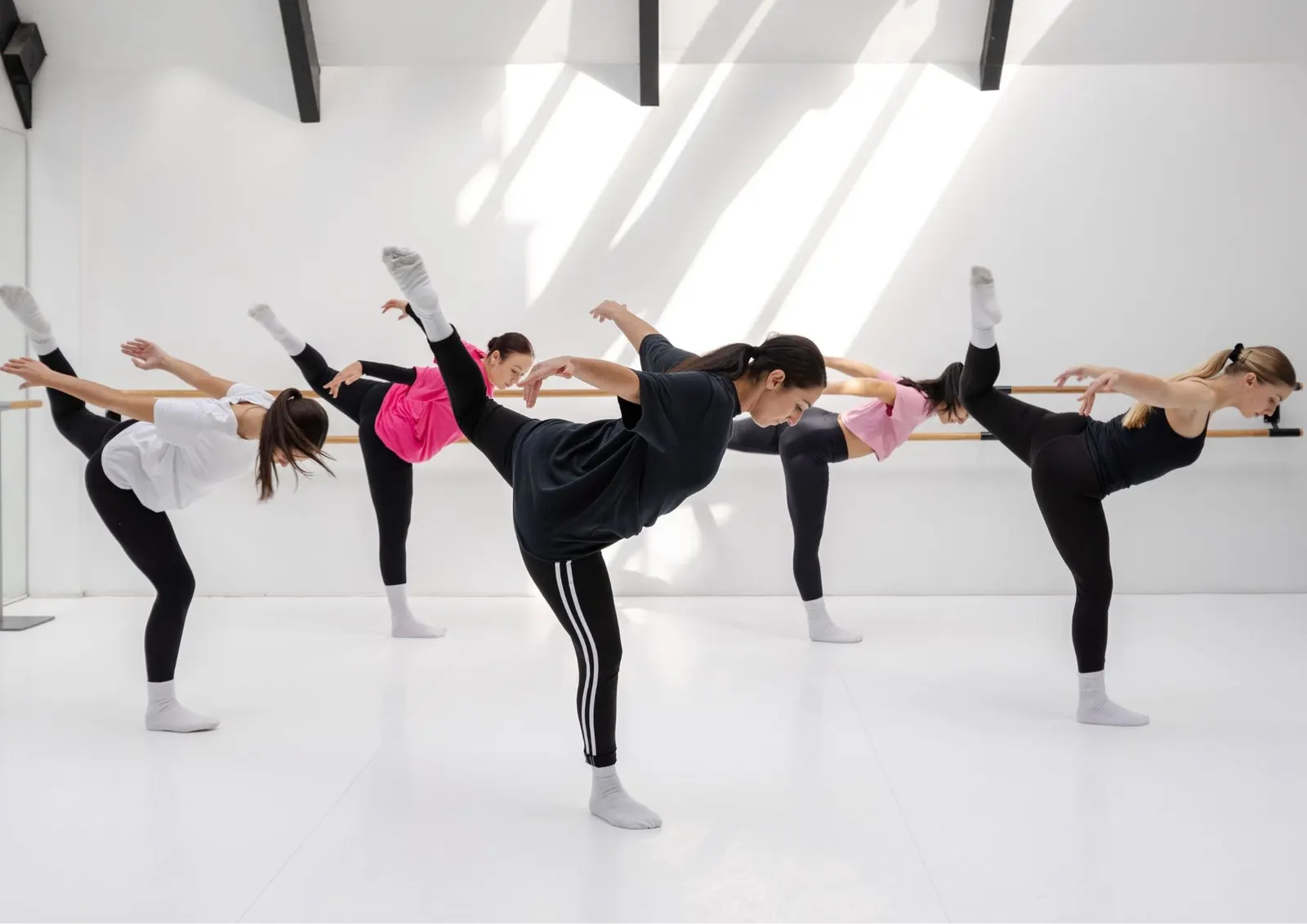
We’ve all seen the images: a yoga practitioner sitting perfectly still, twisted into a pretzel, or standing like a statue. While traditional yoga is beautiful, there is a new movement taking over the wellness world in 2026 that feels less like a “workout” and more like a “recharge.”
It’s called Dance Yoga. If you’ve been feeling stiff, stressed, or just “stuck” in your daily routine, this might be the most important shift in your practice this year.
The Modern Problem: The “Boxed” Human
Look at your day. You sit in a square chair, look at a rectangular screen, and walk on flat, hard floors. In the gym, you move forward and back on a treadmill or lift weights in straight lines. Biologically, humans weren’t meant to live in boxes. This “linear” lifestyle is why we feel old before our time. It’s why our lower backs ache, our necks feel like stone, and our minds feel foggy.
Dance Yoga is the “Un-boxing” of the human body. It is a professional system that merges the strength of Hatha Yoga with the fluid, rhythmic science of human movement.
It’s Not a Dance Class—It’s a
In this practice, the focus is not on performance, but on using
rhythm to unlock the joints. While traditional yoga focuses on the destination (the pose), Dance Yoga focuses on the transition.Think of it this way: Traditional yoga is like a beautiful photograph. Dance Yoga is the movie. It’s the art of moving from one position to the next with zero effort, zero friction, and maximum grace. This encourages a “Flow State”—that neurological zone where time disappears and the analytical mind quietens.
The Science: Why Your Body Requires This
- Hydrating the Fascia: Static stretching is beneficial, but rhythmic pulsing is more effective for the connective tissue (fascia). It acts like a pump, forcing hydration back into the tissues, which maintains muscle elasticity and prevents that “stiff” morning feeling.
- The Brain-Body Upgrade: Moving in circles and spirals (multi-planar movement) forces the brain to create new neural pathways. It improves coordination, balance, and mental “sharpness” by challenging the brain’s spatial processing.
- The Lymphatic Flush: The body’s waste disposal system (the lymph) doesn’t have a pump; it only moves when you move. The sweeping, “wavy” movements of Dance Yoga act as a manual flush, cleaning the system and boosting energy levels.
Deep Dive: Fascial Memory and Emotional Release
One of the most interesting aspects of this practice is the study of Fascial Memory. Science now shows that fascia is not just “wrapping” for our muscles; it is a sensory organ that stores the chemical signatures of stress.
When we experience a “fright” or a period of high stress, our fascia tightens and “binds.” If we only move in straight lines, those binds stay locked. By using the spirals and ripples found in Dance Yoga, we create a multi-directional shearing force. This “unsticks” the fascial layers, allowing for a profound sense of emotional lightness. You aren’t just stretching a muscle; you are literally “clearing the files” of old stress from your physical architecture.
The Bio-Physics of Rhythm: Why BPM Matters
In Dance Yoga, music is a functional tool used to influence the Autonomic Nervous System through Entrainment—the tendency for your heart rate and brainwaves to “lock in” to an external pulse.
- Resting Sync (60–80 BPM): This mimics a resting heart rate, signaling the brain that there is no “emergency.” It lowers cortisol and allows muscles to move from “guarding” (stiffness) to “gliding” (fluidity).
- The Creative Peak (90–120 BPM): This increases blood flow without triggering “fight or flight.” It creates “Vagal Tone,” training your nervous system to stay calm even when the heart rate is elevated.
The Vagus Nerve: The Secret to High-Performance Calm
At the heart of Dance Yoga is the stimulation of the Vagus Nerve—the longest nerve in the body and the “commander-in-chief” of your relaxation response.
Traditional yoga stimulates the Vagus nerve through breath, but Dance Yoga adds the element of Rhythmic Vibration. By undulating the spine and moving the neck in soft circles, we gently “massage” the path of the Vagus nerve. This improves what scientists call Heart Rate Variability (HRV). A high HRV is the gold standard for health in 2026; it means your body can switch from “work mode” to “rest mode” with total ease.
The Architecture of Flow: Studying the “Why”
Deepening one’s understanding of Dance Yoga requires a shift in how we view human anatomy. Instead of seeing the body as a collection of separate parts, we explore it through the lens of Tensegrity (Tension + Integrity).
- The Science of Tensegrity: This is the study of how the body maintains its shape through a continuous web of tension. When we move in Multi-Planar ripples, we are training the body to function as a unified, resilient structure.
- Symphonic Sequencing: Movement is much like music. Understanding the “Why” behind a ripple or a spiral allows for the study of Kinetic Chains—how a movement in the ankle, for example, can influence the release of tension in the neck.
- The Logic of Grace: Mastering these transitions involves a 30-hour deep dive into Bio-Mechanics. It is a journey for anyone interested in the logic of movement—learning how to bypass friction in the joints to achieve maximum efficiency in every breath and motion.
Home Practice: From Stillness to Flow
To experience the science yourself, try these three “Transitions” at home:
- The Spinal Ripple: From a standing position, soften your knees. Imagine a wave starting at your tailbone and moving up your spine like a string of pearls moving underwater.
- The Floating Warrior: In a Warrior II pose, inhale to slightly straighten your front leg; exhale to sink back down. Imagine moving through warm honey.
- The Circular Cobra: While lying on your belly in a low Cobra, draw small circles with your nose, letting the movement ripple into your shoulders to release the fascia around the heart.
Stop Moving Like a Robot. Start Moving Like You. Your body was born to ripple. It was born to wave. It was born to dance.
Knowledge Recap: What We Learned
- Tensegrity: Your body is one connected web; moving the hips can heal the neck.
- Vagal Tone: Rhythmic movement “massages” your nervous system for better sleep.
- Fascial Memory: Spirals help release the chemical signatures of old stress.
- Entrainment: Your heart rate naturally syncs to the BPM of the music to lower cortisol.